This blog aims to proclaim the One who said, "I am the light of the world. Whoever follows me will not walk in darkness, but will have the light of life."
Tuesday, March 27, 2012
How Deep the Father's Love for Us
One of the contemporary hymns that I learned to like singing is Stuart Townend's 'How Deep the Father's Love for Us.' During our Church Family Retreat every Holy Week, we sing this beautifully written song. I especially like the last few lines which says,
Why should I gain from His reward?
I cannot give an answer
But this I know with all my heart
His wounds have paid my ransom.
The song clearly views the atoning sacrifice of our Lord Jesus Christ as a way for us to be redeemed from our bondage to sin. Christ's death is the ransom price for those He came to save. He is the Father's expression of love for us His elect. Through His sacrificial death we have been set free from the power and penalty of sin. By faith in Him, Christ, by His Spirit, has delivered us from our enslavement to sin. Thanks be to God!
Here's the full lyrics of this contemporary classic:
How deep the Father's love for us,
How vast beyond all measure
That He should give His only Son
To make a wretch His treasure.
How great the pain of searing loss,
The Father turns His face away
As wounds which mar the chosen One,
Bring many sons to glory.
Behold the Man upon a cross,
My sin upon His shoulders
Ashamed I hear my mocking voice,
Call out among the scoffers.
It was my sin that left Him there
Until it was accomplished
His dying breath has brought me life
I know that it is finished.
I will not boast in anything
No gifts, no power, no wisdom
But I will boast in Jesus Christ
His death and resurrection.
Why should I gain from His reward?
I cannot give an answer
But this I know with all my heart
His wounds have paid my ransom.
Lord willing, we are going to sing this song again during our Church Family Retreat next week.
Tuesday, March 13, 2012
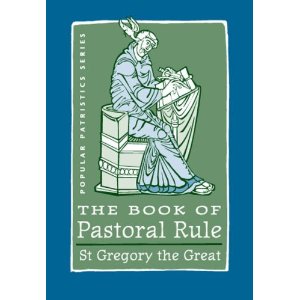
THE BOOK OF PASTORAL RULE
by Gregory the Great (c.540-604)
Back in seminary, I was required to read this classic book on Pastoral Theology in my History class with Dr. Peter Wallace. I remember reading this and many other ancient texts with great delight. The modern publisher of this book summarizes its comment about this volume by saying, “Recognized as the most thorough pastoral treatise of the patristic era, this sixth-century work by Saint Gregory the Great carefully details the duties and obligations of the clergy concerning the spiritual formation of their flock.”
Here’s my summary of Part I and Part II of this book. I hope this helps to remind us pastors and elders, and those aspiring to the work of shepherding God’s flock, that the work of ministry is a privilege God has given to those whom He called to the pastoral office to use His gift of leadership to serve His people and to glorify Him.
Part I. Concerning Qualifications for Spiritual Leader and Shepherd
1. Knowledge of the Lord and sufficient pastoral experience.
2. One who lives and practices what he learns.
3. He does not fear adversity or desire prosperity.
4. A person who is not easily distracted by 'managerial' tasks but able to focus on the main task of pastoral leadership.
5. A man of virtue who is willing to expend oneself and one's personal enrichment in order to lead and feed the flock of God.
6. He is humble to recognize his unworthiness to the office but willingly obeys when called.
7. One may willingly aspire for spiritual leadership while another may have been brought to it by compulsion.
8. While the office of a bishop or elder is a good work to be desired, one has to seek not the honor of the office but the office itself and what it entails.
9. The one who aspires for spiritual leadership should not assume that he will do well when he is into it even though he showed no virtue as a layperson.
10. Being a good example for everyone in life and piety must be a quality for the one to assume spiritual leadership.
11. Those who lack the qualities for spiritual leadership should not present themselves to it.
Part II. Concerning the Life of the Pastor
1. The life of a pastor must outshine that of his flock. He must retain a life of righteousness.
2. His thoughts must be pure so that he can reasonably deal with those who need cleansing of the heart.
3. The pastor must be exemplary in his service, not just with his words.
4. He must know when to keep silent and listen to his people and when to speak the right words to build his people up.
5. The pastor needs a delicate balance of sympathy and compassion to his neighbor and a solemn piety and intimacy with God.
6. He must be able to humble himself in the company of the good yet firm enough to confront and assert his authority over those who are delinquent in their life.
7. The pastor should not abandon his private internal life due to the demands of public external responsibilities, nor should he be overwhelmed by the needs of his private interior piety to the point of abandoning the public matters of his office. He should therefore watch himself not to be preoccupied with one at the expense of the other for both his internal piety and public responsibility are important in serving the people of God.
8. The pastor should be careful in his ministry not to seek to please others or seek their approval. His concern, however, must be to lead others to what pleases them, that is, the truth of God, that which satisfies their soul.
9. He must have the capacity to distinguish between virtue and vices in self and in others for some of the vices seem to look like virtues at first instance, but through careful consideration vices manifest themselves as they really are.
10. A good pastor must know when to rebuke and correct those who err and when to forego and forewarn those who need to be warned. He must also be able to discern when to be firm and when to be gentle in dealing with his flock.
11. By the inspiration and guidance of the Holy Spirit, the pastor must learn to devote himself in the meditation and sacred study of the Word of God in order to gain wisdom and insight in fulfilling his office.
Monday, March 12, 2012
Does God Answer the Prayers of Unbelievers?
This question was asked in one of the Facebook fora that I’m a part of. Since I’m very interested in anything about prayer, I’ve shared some of my thoughts on this question. Here are a few of those thoughts.
First, the simple answer may be found in the Gospel of John: "We know that God does not listen to sinners, but if anyone is a worshiper of God and does his will, God listens to him" (John 9:31).
Second, when one surveys the Biblical passages on prayer, the overwhelming evidence tells us that God answers the prayers of His people if it is according to His will. However there are instances in the Old Testament that even foreigners, non-Israelites, are heard by the Lord when they come to Him in faith, as 2 Chronicles 6:32-33 says, "“Likewise, when a foreigner, who is not of your people Israel, comes from a far country for the sake of your great name and your mighty hand and your outstretched arm, when he comes and prays toward this house, hear from heaven your dwelling place and do according to all for which the foreigner calls to you, in order that all the peoples of the earth may know your name and fear you, as do your people Israel, and that they may know that this house that I have built is called by your name." That explains the Roman centurion in Matthew 8:5-13 and the Canaanite woman in Matthew 15:21-28. Hebrews 11:6 tells us that "… without faith it is impossible to please him, for whoever would draw near to God must believe that he exists and that he rewards those who seek him."
Third, there are times of course that God does not hear the prayers of His people, that is, when they remain in their sin. "O Lord God of hosts, how long will you be angry with your people's prayers? You have fed them with the bread of tears and given them tears to drink in full measure” (Psalm 80:4-5). Psalm 66:18 also adds, “If I had cherished iniquity in my heart, the Lord would not have listened.” Confession of sin and repentance from sin are necessary before the Lord could hear His people's prayer.
This is consistent with what James is saying in 4:13-16: "Is anyone among you suffering? Let him pray. Is anyone cheerful? Let him sing praise. Is anyone among you sick? Let him call for the elders of the church, and let them pray over him, anointing him with oil in the name of the Lord. And the prayer of faith will save the one who is sick, and the Lord will raise him up. And if he has committed sins, he will be forgiven. Therefore, confess your sins to one another and pray for one another, that you may be healed. The prayer of a righteous person has great power as it is working." The Lord hears the prayers of His people who recognize and confess their sins before Him.
So it seems that the overwhelming answer of the Scripture to the question, “Does God answer the prayer of unbelievers?” is "No!"
Fourth, as one who subscribes to a Reformed confession, I think the Heidelberg Catechism (1563) gives us a very important thought on why Christians ought to pray and what kind of prayer that pleases God and moves Him to answer. In Lord’s Day 45, Question and Answer 116, the Catechism asks, “Why do Christians need to pray?” The answer goes, “Because prayer is the most important part of the thankfulness God requires of us (Ps. 50:14-15; 116:12-19; 1 Thess. 5:16-18). And also because God gives his grace and Holy Spirit only to those who pray continually and groan inwardly, asking God for these gifts and thanking God for them (2 Matt. 7:7-8; Luke 11:9-13).
The Catechism continues to ask in Question and Answer 117, “What is the kind of prayer that pleases God and that he listens to?” Here is the Catechism’s answer, “First, we must pray from the heart to no other than the one true God, revealed to us in his Word, asking for everything God has commanded us to ask for (Ps. 145:18-20; John 4:22-24; Rom. 8:26-27; James 1:5; 1 John 5:14-15). Second, we must fully recognize our need and misery, so that we humble ourselves in God’s majestic presence (2 Chron. 7:14; Ps. 2:11; 34:18; 62:8; Isa. 66:2; Rev. 4). Third, we must rest on this unshakable foundation: even though we do not deserve it, God will surely listen to our prayer because of Christ our Lord. That is what God promised us in his Word (Dan. 9:17-19; Matt. 7:8; John 14:13-14; 16:23; Rom. 10:13; James 1:6).
Finally, a friend raised the issue that there are occasions when it seems that God answers the prayer of unbelievers and because of the answer to that prayer these unbelievers got converted to Christianity. One of the examples she mentioned is the former Russian church persecutor Sergie Kourdakov who wrote a book, "Forgive Me, Natasha", and related in that book that when he prayed, "God, if you exist please show me Yourself," and God showed him, and he became a Christian after he defected and jumped ship in Canada.
She also mentioned another example. She related a "student exchange from China who has never heard of the name of God and did not know that Jesus is God. She never saw a Bible. She came to an international Bible study with the motive to practice speaking English. One day, her bag was caught in between the doors of a New York City Subway train. A week before that, she read about Jesus raising Lazarus from the dead and answering Mary's prayer. So she said, ‘I heard the God of Christians answers prayer. I am not a Christian but I want to pray to the God of the Christians to help return my bag.’ (Inside her bag were her passport, $400 cash, her student's class cards for New York University). She called the staff of International Students to pray with her and for her. She also called on the God of the Christian to show Himself to her. The Staff of ISI are under fire because it is impossible to retrieve a bag with cash in NYC. One week after, her bag was returned at the NYU Lost and Found section, everything was intact, and the cash was untouched! The unbeliever student from China said ‘I see that the God of Christians answers prayers indeed!' She became a Christian.”
I responded that these examples presuppose what the Scripture really teaches that before these unbelievers called upon the Lord they must have heard something about God and Jesus Christ first. Then through providential circumstances they were brought into a situation to call upon God. And as Hebrews 11:6 tells us, those who draw near Him must believe that He exists, even if that faith is but like a mustard seed.
I can't help thinking of two Gentile women who became true Israelites because of what they've heard about the God of Israel. Rahab, for example, must have heard about the God of Israel through the miracles He performed in Egypt and in the wilderness before she changed allegiance from the god of Jericho or the god of his people to the God of Israel (Judges 2:8-13). Likewise, before Ruth the Moabitess made that timeless confession to her mother-in-law, “Your people shall be my people and your God shall be my God,” she must have heard about the God of Israel, probably through her husband Mahlon and her in-laws.
This is quite relevant because in the case of the Chinese student exchange, before she prayed to the God of the Christians she must have read or heard about Jesus. This is the same situation even in the case of Sergei Kourdakov. Before he prayed to God, he must have heard a lot of things about God whom he denied and whose children he persecuted. Both of them might have believed God (in the sense that they have knowledge or heard about God) before they started praying to the Lord, but it seems clear that by the time they prayed to God, when they begin asking something from God, God has already started to work faith in them, otherwise how can they call upon Him?
So the Holy Scripture clearly teaches that God hears and answers the prayer of His children when they pray according to His will and purpose and when they ask Him humbly, fully aware of their undeserved status before Him who is holy and just, loving and merciful. Experience as well proves that. Just think of how many times we have failed to obey God’s will and yet when we draw near Him, humbling ourselves and confessing our sins, He hears us and grants us His blessings. Even those unbelievers whom He draws to Himself are given the faith to believe Him and to turn to Him and to call upon Him. This is all by His amazing grace and abundant mercy to undeserving sinners like you and me.
Friday, December 30, 2011
My Prayer-Wish for 2012
~ That God’s name be honored more and more by all professing Christians.
~ That more Christians would truly seek God’s kingdom first than their own personal advancement and fame.
~ That members of the Church of Jesus Christ would truly demonstrate to the world that they belong to God by loving one another in the truth.
~ That the Lord would continually meet the needs of His people that they might be able to faithfully fulfill the Great Commission.
~ That believers would learn to humble themselves before God and seek His forgiveness and the forgiveness of those whom they have offended.
~ That by His Spirit, Christ would lead His Church to daily overcome worldliness, temptation and sinful desires.
~ That true followers of Christ Jesus would live their lives in light of the return of our great God and Savior Jesus Christ.
Monday, December 5, 2011
Love for Biblical Doctrines
I am very excited with what’s going on in our church today. Why, because I am seeing our young children learning Biblical doctrines in our Sunday School and catechism classes. It’s amazing to hear many of our children memorize Bible verses together with Bible doctrines from our Heidelberg Catechism. Ask one of them What is true faith, and I’m sure you would get an answer like,
“True faith is not only a knowledge and conviction
that everything God reveals in his Word is true;
it is also a deep-rooted assurance,
created in me by the Holy Spirit through the gospel
that, out of sheer grace earned for us by Christ,
not only others, but I too,
have had my sins forgiven,
have been made forever right with God,
and have been granted salvation.”
Oh it’s wonderful to hear our children recite with us the Apostle’s Creed, or pray with us the Lord’s Prayer. I am hopeful that when my generation is gone, our children will take up the task of teaching the next generation of the Biblical doctrines they are now learning from us.
Children, as you may know, can memorize many Bible verses and Bible doctrines from our Catechism or Confession of Faith. And the earlier you teach and encourage them to memorize, the easier for them to learn. So don’t underestimate the learning capacity of your children. You’ll be amazed.
However, while I see this happening to our children, there is a lamentable fact that not many adult Christians, even elders or leaders in Reformed or Evangelical churches, are learning Biblical doctrines. If I am, for example, to ask you, "What is justification," "What is sanctification," and "What’s the difference between the two," would any of you dare to stand and give a brief and concise definition and distinction of these Biblical doctrines?
The point I want to make is that, an average Christian would rather spend time reading anything than classic and orthodox books on theology, or even the Bible itself. My seminary professor, Dr. Cornel Venema, rightly observes: “We live in a period of history that neither prizes biblical doctrine nor believe that its right understanding and defense is a matter of urgency. The lack of solid doctrinal teaching and preaching in many Reformed churches is lamentable. How many churches, even Reformed ones, do not prefer a pastor known for his congenial personality than for his doctrinal integrity and strict adherence to the true teaching of the Word of God?”
It is lamentable indeed! So I pray that we will take seriously the biblical mandate to promote sound doctrine and godly living in our churches today. May our pastors, elders and church leaders set a good example for the believers “in speech, in life, in love, in faith, and in purity” (1 Tim. 4:12).
Thursday, November 24, 2011
Hope Focused on Christ and His Return
(A short meditation on 1 John 3:3)
“And everyone who thus hopes in him purifies himself as he is pure" (1 John 3:3 ESV).
I’ve heard it said that your eschatology, that is, your doctrine of future things, determines your present conduct. What that means, I suppose, is that your view of the future shapes and forms your behavior and lifestyle now. So if you think that there’s no life after death, you wouldn’t care what kind of life you have now. It doesn’t matter anyway.
But if you believe that there is really life after death, and there is a God who will judge you according to your works, whether good or evil, then you would surely be careful and watchful with the way you live now. So how does your view of the future affect your life?
You see, some people are fascinated to study future things. They are interested to learn about the second coming of Christ, millennium, rapture, final judgment, etc. But for some reason their knowledge of these things doesn't move them to right action or holy living. Others avoid the study of them altogether because of fear or the perception that they are difficult to understand. Besides, some would say, they are not really important. So why bother yourself?
I don’t know if you can identify with these sentiments. But if you don’t seem to see the connection between your belief of the future and the quality of your present conduct, you really do not have the kind of hope that motivates believers to live godly lives.
Here in 1 John 3 we can learn that our hope of Christ’s appearing motivates us to live pure and holy lives. In many ways the conscious anticipation of Christ’s second coming drives us to holy living and faithful service. And 1 John 3:3 tells us that as children of our heavenly Father, forgiven and accepted in His Son, we must focus on the purity of our Lord and Savior Jesus Christ and the promise of His return.
As children of God, our hope is not in circumstances or in some optimistic wish for a better tomorrow. Our hope is in the person of Jesus Christ and in His promised return to take us home. He said that He was returning to heaven to prepare a place for us (John 14:2). Then He added these wonderful words of hope, “If I go and prepare a place for you, I will come again and receive you to Myself, that where I am, there you may be also” (John14:3).
He’s coming back for us, and when that happens, we will go to be with Him in the place that He has prepared for us! Shouldn't all of our hope be fixed on Him then?
The holiness of God and of the Lord Jesus Christ is a frequent theme in 1 John. In 1:5, John tells us that, “God is light, and in Him there is no darkness at all.” In 2:1, he refers to Jesus as “the righteous.” In 2:20, he refers to Christ as “the Holy One.” In 2:29, he again affirms that “He is righteous.” In 1 John 3:3 he says, “He is pure.” This word 'pure' originally referred to ceremonial purity, but it came to mean that which is “pure in the highest sense.” It refers to freedom from all defilement of sin, especially moral sin. So this purity refers to our sanctification.
Clearly, that glorious future day when we see Jesus face to face, that vision transforms us. John says, “And everyone who has this hope fixed on Him purifies himself.” The Biblical view on sanctification is that, on the one hand, God has predestined us to be conformed to the image of His Son (Rom 8:29). In that sense, it’s a done deal and clearly, God does it.
Yet on the other hand, God says that we must purify ourselves as we focus our hope in our pure and holy Lord. The Apostle Paul writes the same thing: “Since we have these promises, dear friends, let us purify ourselves from everything that contaminates body and spirit, perfecting holiness out of reverence for God” (2 Cor. 7:1).
You and I must actively pursue purity and holiness in the light of the appearing or return of the Lord. To actively confess the coming of Christ means to avoid any activity that distracts us from serving Him faithfully and living for His glory. For “everyone who has this hope fixed on him PURIFIES HIMSELF, just as he is pure” (emphasis mine).
So here we see that there is a definite sense in which we must be active in the process of sanctification in the light of Christ's second coming. The other side, however, is that only the blood of Christ can cleanse us (1 John 1:7, 9). We are cleansed through the washing of water with the Word (Eph. 5:26). So God’s Word and His Holy Spirit are like the soap and water. But we’ve got to apply it to the dirt of our sin.
The Word is also like a mirror, revealing to us the dirt on our faces. When it does that, rather than ignoring it, we must confess our sins to the Lord, appropriate by faith His shed blood as our source of cleansing, and take the necessary steps to avoid that sin in the future. That's part of purifying ourselves.
To summarize our point, if you are clear in your thinking who Jesus is and what pleases Him, you wouldn’t be doing something that would offend Him, would you? Rather you would seek to do what is right and pleasing in His sight. So by the power of the Holy Spirit keep on cleaning the dirt out of your life.
Begin with your mind. Resist every thought that is contrary to the Word of God. But dwell on thoughts that exalt your Sovereign Lord. Then keep on putting off your old self and its desires – sexual immorality, evil desire, greed, slander, lie, wrath, malice, unwholesome talk, etc. Likewise continue putting on your new self in Christ, even holiness, compassion, kindness, humility, meekness, patience, self-control, and all the virtues becoming as a child of God. If you do these things, you know that you're fixing your hope in the Lord and in His coming. And truly that vision purifies you even now.
The Ancient Love Song (A book review)
(This is my book review of The Ancient Love Song: Finding Christ in the Old Testament
by Dr. Charles D. Drew)
All throughout, this book very well shows that Jesus Christ is not only present in the Old Testament but also that apart from Him all the Old Testament promises and portrayals of the Messiah would not find ultimate fulfillment. Properly interpreted, all the Old Testament books talk about, even record, the words of Jesus Christ.
The author begins the book discussing the benefits of understanding the Old Testament well, stating that it is God’s “rich and beautiful proposal of marriage, designed to win not only our faith but also our affection” (2). In other words, the Old Testament is an ancient love song, designed to win the heart of every believer (200).
In the first chapter, Charles Drew argues that the rest of the Scripture is the unfolding of God’s loving plan in Genesis 3:15, to save fallen man and to restore him to a wonderful union and communion with Him even though he has forfeited his right to life. God is committed to accomplish this at the perfect time for He enters human history in the person of His Son, “born of a woman, suffers, dies, and rises again to secure once and for all the hearts of his beloved people” (4).
The author goes on to say that unless we see the Old Testament, and the whole Scripture for that matter, as the working out of this dramatic plan of God centering on the person and work of Jesus Christ, we miss out a lot of God’s faithful love.
The author then goes on to show that Old Testament history is a grand mystery story (Chapter 2). Beginning with a “cryptic promise” in Genesis 3:15, the biblical story unfolds one promise after another, which are all “rooted in and driven by the first” (9). These promises, of course, found their fulfillment in Jesus, the long expected Messiah. Tracing from Adam and Eve until the coming of Jesus Drew points out that Jesus is the promised seed of the woman who's going to crush the head of the serpent. Thus by sending His Son, God did not only resolve the mystery of Genesis 3:15. He also reminds us that He is faithful in fulfilling His promise, that He can be trusted. By His miraculous mercy in Christ, God has rescued the weak and rebellious descendants of Adam (22-23).
Throughout Biblical history, God sees to it that He is not One who lives “from a distance,” watching the world He created where man lives. In various ways and different occasions God have had real “close encounters,” albeit brief and temporary, with some men (Chapter 3). He especially made Himself “seen” and heard by individuals, like the patriarchs, and by a nation whom He chose to love and live with. God stayed in Israel's midst, first in the tabernacle, then in the temple. He raised up prophets in Israel who served as His mouthpiece so people would hear Him speaking to them. The prophets served as mediators between God and His people until He Himself came to live among them.
God has communicated and demonstrated His unfailing love to His people. He made them prosperous and successful in the land. But when they ignored Him and His word, serving and loving other gods, He drove them out from the Promised Land to a foreign country. It was only by His gracious promise that Israel was able to return.
Coming from exile, she began hearing the word of God again through the prophets, though not for a long time. For over 400 years God remained silent to His unfaithful bride, until He came to her, in flesh and blood, in the person of His Son, to redeem her and the whole world. God again manifested His love to Israel in the life, death, and resurrection of Christ. “The Cross led to Easter and Pentecost,” writes Drew, “and with the gift of the Spirit came the gift of intimacy that had so long eluded God's people. The terrifying glory that had formerly settled behind the heavy curtain in the temple came to settle in human hearts made habitable by the Cross. God's people became God's temple. The groom came on Pentecost to live in us forever” (38).
In chapters 4 and 5, Drew demonstrates that many Old Testament characters point us to the Messiah Jesus. In these chapters, he labors to answer the question, “How then should we regard these Old Testament characters, especially those who were believers and followers of the living God?” (Chapter 4). Drew thinks that they ought to be viewed in two levels: first, as fellow pilgrims or clouds of witnesses (Heb. 12:1) “whose faith in the coming Messiah challenges and encourages our faith” (44); and second, as symbols, or types, of Christ. On the one hand, all the Old Testament saints' faith points us to Jesus “in at least three ways: he is the object of their faith, he is the perfect model of their imperfect faith, and he is the builder of their faith” (45). On the other hand, many of them point us to Christ by foreshadowing “the ministry and character of the Word made flesh” (50). By faith, God changes His people by bringing them into a covenant relationship with Him through Christ, so that in Him God's purpose for them would also be realized, that is, to be like Christ.
Using the life of Joseph, Jacob's favored son, as an example, the author convincingly argues that to do justice to Joseph's “colorful” life in the Scripture interpreters must see Jesus' life and ministry in his life. God sets Joseph's circumstances to resemble that of His only Son who is going to save many people from death by sin, just as Joseph was sent by God to save many lives from death by starvation.
Drew also points out that Christ is the theme of the Old Testament wisdom books and the Psalms. The wisdom books point us to Christ because there we find Him walking and embodying the way of wisdom, that is, fearing God and keeping His commandments, which way of life brings ultimately eternal blessing in the presence of God (Chapter 6). The Psalms are songs about the Messiah and/or songs by the Messiah Himself (Chapter 7).
Chapters 8 through 10 are wonderful surveys of Christ's threefold office from the Old Testament. One thing I like in these chapters is that the author always relates Christ's threefold office to the believers. These are Christological chapters no doubt but Drew sees to it that the discussions bear practical implications to the Christian reader.
Chapter 11, the last chapter, is a wrapping up of the opening theme on God's loving plan in Genesis 3:15, which ultimately addresses man's greatest problem and enemy, that is, sin and death. In Christ, who is the last Adam, God dealt with sin and death once for all in His substitutionary death and glorious resurrection. Those who are united with Him by faith are given abundant life and are now living in the reality of that new life, expecting its fullness in the glorious presence of God the Father, the Son, and the Holy Spirit in an uninterrupted union and communion.
My reading of this book has led me to say that it is simply amazing in its simplicity. Written in a popular way, Drew presents his Old Testament Christology in a fresh and very edifying way. I appreciate his effort to put more Bible verses than academic comments in the footnote. That way I see his burden of interacting more with the Biblical authors than the Bible scholars. The “Questions for Discussion and Reflection” section at the end of every chapter is also very helpful in terms of reviewing and applying the author’s discussions. These reflection questions can be very useful in a group study. Many pastors and laymen would find this book profitable, as I did. Drew truly makes a convincing argument for the need to study the Old Testament and to see its Christocentric message that would enrich modern Christians' faith and life.
Those who need good interpretive help of the Old Testament this book is a ready resource. Readers would not find this volume boring. I especially like the author's way of introducing almost every chapter with a personal anecdote and a specific 'problem' which Christ addresses in His person and ministry. Christ has especially 'solved' the mystery of those righteous who suffer, like Job, because Jesus is the Righteous One who suffered, but was ultimately vindicated by God.
Those who seek a more detailed and thorough discussion of Christlogy in the Old Testament might have to explore other books. Drew does not extensively and exhaustively look into the many issues pertaining to specific Old Testament symbol or types of Christ. His approach is a broadstroke portrayal of Christ that gives the reader enough idea to understand that in each genre of the Old Testament literature Christ can be found. His thoughts are thoroughly Biblical.
One area of improvement for the the book would be the inclusion of indices. The book could have been more useful if the author also includes Scripture and subject indices.
Subscribe to:
Posts (Atom)