Monday, July 18, 2011

Thoughts on Coveting


My son, Yuri, and I are doing regular reading from Bob Schultz “Boyhood and Beyond: Practical Wisdom for Becoming a Man” as part of his homeschooling. There are a lot of insights from that book about real “practical wisdom” that are worth reading, re-reading and applying in daily life. This morning we came to that chapter on coveting or greed that really struck me as we read it. I would like to share some of Bob’s thoughts here. I hope it will help you fight against this idolatry which is very “rampant” among us and which we should "put away" and replace it with the precious word of God (James 1:21).

“When man covets, he is unable to enjoy the presence of God. Foremost in his mind is the item he wants. He dreams about it. He schemes about how to get it. He becomes so full of his desire that his heart has no room to experience God's presence. The man has lost his trust in God to supply his need ["according to his riches in glory in Christ Jesus" (Phil. 4:19)]. His focus, his attention, is getting the item he wants. Sometimes he will resort to whining, to deception, and even to outright theft. That is why the Bible says that covetousness is idolatry [Eph. 5:5; Col. 3:5]. It is having something in your hearts that holds more of our attention and desire than God holds….

If something doesn't belong to you, don't covet it and don't possess it. If you find an item that was lost or stolen, locate the owner and return it. The usefulness and happiness of a man does not depend upon what he acquires. Fullness of joy depends upon the awareness of God's presence ["You make known to me the path of life; in your presence there is fullness of joy; at your right hand are pleasures forevermore." ~ Psalm 16:11]. Anything that threatens that awareness is not worth having.”

Sunday, July 10, 2011

Some Helpful Principles in Hermeneutics


(this is based on an email message by Dr. Rowland Ward in one of those discussion groups, which I forgot)

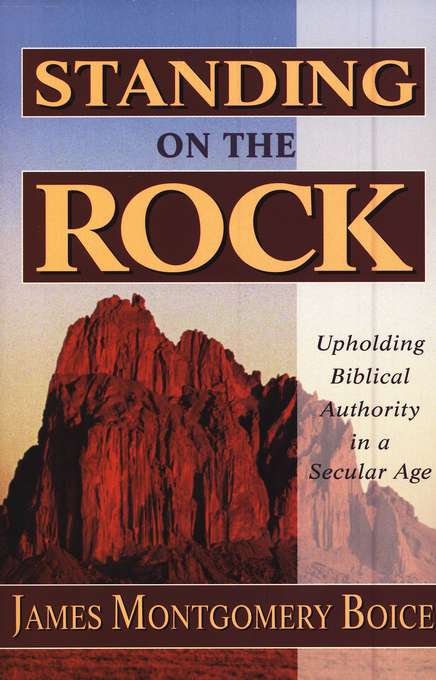
Montgomery Boice's little work - "Standing on The Rock" (Tyndale). Not only is it written in layman's terms, it also does a fine job of discussing problems with scientific (so-called) evidences, and has a great section on the Chicago Statement of Biblical Inerrancy, and the Chicago Statement on Biblical Hermeneutics. It's 157 pages, paperback and an excellent resource all around.

He includes a very quick and cogent section he calls "ten principles of proper Bible interpretation." I cover these with my congregation at least once a year. Perhaps Boss Stamper will forgive the length in consideration of the fine help it is. They are worth repeating here.

1 - The Principle of Unity. Since the Bible has one author, namely, God, the parts of the Bible must go together to form one overall story and present one consistent theology. If they do not seem to do this, we are misinterpreting.

2 - The Principle of Non Contradiction. Since the Bible has one author, one part of the Bible will not oppose or contradict the other.

3 - The Principle of The Analogy of Faith. The best interpreter of Scripture is Scripture itself. Less obscure passages will throw light on obscure ones.

4 - The Principle of Context. Bible statements are not unrelated oracles; therefore, they are not to be torn from their context. They must be interpreted within the context of the chapter, book and eventually the entire Word of God.

5 - The Principle of Style. The style of a passage must be taken into consideration. Poetry must be considered as poetry, parables as parables, historical material as historical and so on.

6 - The Principle of Didactic material interpreting Historical material. Historical happenings are sometimes right and sometimes wrong, sometimes normal and sometimes abnormal. Teaching material shows how historical is to be interpreted.

7 - The Principle of Purpose. The chief end or purpose of a passage's being written should govern our interpretation. It cannot be used to teach what it was not written to teach.

8 - The Principle of the Importance of Words. Thoughts cannot be conveyed without words. Therefore, it is important to study words and know their exact (and sometimes changing) meanings.

9 - The Principle of Obedience. The deep things of the Bible are hidden from those who refuse to obey its teachings.

10 - The Principle of Prayer. It is easy to err in interpreting any document, but this is especially so when we are dealing with one presenting spiritual matters. We must ask God to send His Holy Spirit to guide our understanding.

**********************************************************
Without devaluing these points I wonder if they lack sufficient recognition of the fundamental purpose of special revelation, and its redemptive/historical nature. They do sound a bit Western analytical to me.

So without being at all original I would say,

1. God's plan as revealed in the Old and New Testaments is consistent and a unity, and is based in the historical process which God has ordained in order that the goal of creation may be reached.

2. The Biblical narrative is not an exhaustive history but a selective one providing certain facts together with their interpretation. A correct interpretation of Scripture will respect the interpretations of one part of Scripture in another part.

3. God's appointment of the course of history is reflected in redemptive re-enactments of creation until fulfilled in a new beginning which has no end.

4. In this manner there is a distinct relationship between the narratives of Genesis and the climax of redemption in a new heaven and a new earth, and a ready application to the present of narratives belonging to a earlier historical time.

5. The context, nature and intention of each particular part of God's revelation must be duly considered in order to right interpretation, and the need for saving enlightenment coming from the Spirit of God by and with the word must be recognised.

Looking forward to further contributions.

Rowland Ward


Rev Dr Rowland Ward,
Presbyterian Church of Eastern Australia,
358 Mountain Hwy, Wantirna, Victoria 3152 Australia
Tel/Fax Int + 61 + 3 + 9720 4871

Friday, July 8, 2011

Thank You for all Your Prayers and Assistance


July 9, 2011

Dear friends and prayer partners,

Thank you for all your prayers and assistance to our members and attenders who were hit by the flash flood on the night of June 28, 2011. Thank you so much for your kindness and generosity. For sure that means a lot already for the families who are trying to recover from their loss and the trauma caused by the flood.

We took turns in going to the flooded place to bring food and help in any way. Cathy also did some shopping for their immediate needs. The members gave some gifts and relief stuff – cash, clothing, kitchen wares, etc.

Our deacon and I went to their place again Sunday afternoon (July 3) after church to bring some stuff – mats, blankets, pillows, towels, mosquito nets, etc. – which they said they need. They told us that some of them were sleeping on towels the previous nights. Hopefully with some financial assistance you're going to send we could buy some mattress and extra blankets to keep them warm in the coming days.

The cleaning of the house is not yet done. Besides, the rain keeps on coming almost every night, causing them to worry at times. Anyway, one of the church members who live closest to them has hosted some of the children and women in their place. This church member has been blessed with a hut by their house and so it was just perfect for some flood victims to have some privacy. The church member also offered to lend one of their cars to the families flooded to be used during the aftermath of the flood.

I could see that the brethren in the church are responding so well in terms of helping the affected families. Our denomination and the UCRCP in San Carlos City in Pangasinan have sent cash already to help the family. We'll keep you updated of the situation here. Another friend from the US also sent us some assistance for the families. Thank you so much once again for taking the time to pray and gather some help for our church and our church members. I really appreciate your effort.

The families are actually planning to move to a safer place and they are thinking of buying a lot, where they could build a new house. Just several nights ago the river near their place overflowed because of heavy rain and the water has reached their floor again. They're having some trauma, especially when it's raining hard or there's a thunderstorm which is normal in Davao City at this time of the year.

Thank you so much for your concern and assistance. May the Lord continue to bless you and keep you and make His face to shine upon you!


By His grace,

Pastor Vic Bernales

Tuesday, June 21, 2011

Cleaving Unto God


(This is a summary of Abraham Kuyper's devotional thought "Cleaving Unto Him" from his book Near Unto God)

"Therefore choose life...loving the LORD your God, obeying his voice and holding fast to him, for he is your life and length of days,..." - Deuteronomy 30:19b-20a (ESV)

Religion, that is, the worship of the triune God, is the best means that enriches our heart. Yet it is in religion at the same time that sin best thrives. What started as true devotion to God degenerates into cold formalism, lacking in zeal and heartfelt service, because of sin.

Even though the West may appear better than the East in terms of religion, yet many have corrupted it to a great degree of disappointment. In God's point of view, out of millions who profess devotion to God only a few are really devoted to Him.

Yet God continues to issue His command, saying, "Choose life...holding fast to [the Lord]" (Deut. 30:20). Everyone of us, even the most saintly and godly among us, must hear this command: Cleave [or hold fast] unto the Lord your God. Cleaving or holding fast describes the kind of relationship that believer must have with God. It is a picture of an infant intensely clinging to his mother's breast for milk. In her breast the child finds satisfaction that separation from her makes him cry.

Cleaving to God then means loving God and depending upon Him alone with all our life. But who among us truly manifest this deep, intense, and total devotion to God? Only in Paradise was this complete dedication to God possible, yet it will again be the case when we will be perfected in glory.

Does this mean then we give up pursuing true religion here on earth? No! We continue to seek after God in holy service even though perfect devotion is unachievable in this life.

But how do we cleave to God? It is more than intellectual pursuit or confessional loyalty. It is even more than doing good works and maintaining a pious life. Those who really cleave to God do all these but if these things are done simply out of duty and not of delight, these, too, are meaningless.

Real cleaving or holding fast means continually pursuing God, in good times and bad. Even though we sin and fail, we keep on seeking His forgiveness, daily and momentarily, enjoying His fellowship to the end. Then we can truly sing with the psalmist, "As for me, it is good to be near unto God."

Theology of the Reformers: A Review


(This is my review of Dr. Timothy George's Theology of the Reformers)

In a time such as ours when many books and journal articles have already been written about the life and works of Protestant Reformers, particularly about Luther and Calvin, Timothy George's yet another volume on the subject deserves commendation. This book is well-researched, especially its frequent reference and quote of the primary sources. It is also carefully written that scholars, pastors, students of history, and interested Christians from every status and station in life can easily understand and appreciate.

Dr. Timothy George himself is Dean and Professor of History and Historical Theology at the Beeson Divinity School. As one of the most respected historians in the evangelical world, Dr. George is the author of more than 20 books and a hundred of journal articles, and editor of The Reformation Commentary on Scripture with InterVarsity Press. He has been active in the evangelical dialogue with the Roman Catholic Church. He is also a favorite conference speaker among many Baptist denominations and evangelical organizations on history and theology. He holds the Th.D. From Harvard University.

In Chapter One, which is the Introduction, one of the first issues that Dr. George tackles in this book is the matter of periodization of the Reformation. How does one rightly situate the Reformation? Is it at the end of the Middle Ages or at the beginning of the modern era? The author puts it nicely and correctly by saying that “it is best to see the Reformation as an era of transition, characterized by the emergence of a new kind of culture which was struggling to be born even as the old one was still passing away” (17).

Dr. George also addresses the issue of perspectives in Reformation studies. In other words, the question that every historian should ask in studying a particular period in history, say, the Reformation, is this: “How should one approach that period of history?” Every historian has his own idea and perspective on history. One may view it from a socio-economic or socio-political lens while another may focus on the religious or cultural side of it.

In this book, while he recognizes the complexities in studying the Reformation period, Dr. George rightly views it, through the 'eyes' of the Reformers themselves, essentially as ‘a religious event.’ Not that everything is religious, but the author asserts that one cannot properly understand the Reformation without taking it mainly as a religious matter that is deeply concerned with theological issues with significant implications on social, cultural, political, and economic life of that period and the succeeding ones.

The book beautifully weaves the life and theology of three Protestant Reformers and one Radical Reformer of the sixteenth century: Martin Luther, Huldrych Zwingli, John Calvin, and Menno Simons. Most of the information written in the book are not totally new to students of history, particularly Reformation history, as these data have been around for centuries and are now available in different formats (books, articles, CD-ROMs, internet, movies, etc.). However, George has his own way of retelling them in a refreshing way that enables the reader not only to appreciate these 'human vessels' with great spirituality and courage but also to thank the Lord for raising up such men in such a period of great anxiety.

George notes in Chapter Two that the prevailing anxieties of Late Middle Ages, just right at the eve of the Reformation include death, guilt, and emptiness or meaninglessness. And he can think of no other person in that period that epitomizes the hopes and fears of that age than Martin Luther himself, whom he rightly described as “just like everybody else, only more so” (23).

Luther, as a perceptive and sensitive soul that he was, understood the hopelessness and helplessness of the human race before a righteous and holy God. Thus, Luther's restlessness has providentially been used by God to ignite the fire of the Reformation. This Reformation spread and affected many parts of Europe that not even disease or death, nor sword nor Satan can stop the burning passion of the Reformers to proclaim the blazing sword of the Spirit that cuts the heart of sinners, on the one hand, and brings healing and comfort to their weary souls, on the other hand.

It is amazing how Dr. George can put together such a dramatic life and Word-centered and Spirit-powered theology as Luther's in 56 pages in Chapter Three. George characterizes Luther's theology as 'at once biblical, existential, and dialectical' (56). So Luther was not a kind of theologian who delights in speculation and speaks or writes above the head of his listeners and readers. He was an ardent Biblical scholar and theologian who carefully explains and applies the Word of God to the believer's daily life, which affects their eternal destiny. Luther then was concerned not only with the welfare of the people whom he ministered but also with the glory of God who called him to teach and preach the glorious gospel of his Lord and Savior Jesus Christ.

While Dr. George recognizes the enormity and profundity of Luther's literary output, no one can deny that to the Reformer of Wittenburg justification by faith alone is the central summarizing doctrine of the Christian faith, “the article by which the church stands or fall” (62). George ends his chapter on Luther by reminding the readers that this Augustinian monk was a man with warts and vices. Yet in spite of his many weaknesses Luther has left us with “his spiritual insight into the gracious character of God in Jesus Christ, the God who loves us and sustains us unto death and again unto life” (106).

George then deals with the life and theology of Zwingli in Chapter Four. Zwingli, born on New Year's day of 1484 just 51 days after Luther, was aptly described as “both a pastor and patriot, a theologian and a politician” (111), whose “early development,” according to the author “was shaped by two factors which continued to influence his thought throughout his career: Swiss patriotism and Erasmian humanism” (110). As a preacher, Zwingli is famous for his departure from the traditional lectionary preaching to lectio continua which brought him through the Bible, beginning from the Gospel of Matthew (except the Book of Revelation, whose canonicity he doubted).

In spite of his shorter life, lesser corpus of theological work and disagreement with Luther on the Lord's Supper, his stature and spiritual courage as an early Reformer is comparable with Luther. George summarizes the heart of Zwingli's spiritual pursuit with one of the Zurich Reformer's last admonition: “Do something bold for God's sake” (160). This better explains his desire in life and ministry which is “to bring every realm of life, church and state, theology and ethics, magistracy and ministry, individual and community, into conformity with the will of God” (161).

John Calvin's life and theology is the subject of Chapter Five. Though a second generation Reformer, Calvin did not lack the spiritual zeal and motivation that Luther and Zwingli possessed. Moreover, Calvin was humble to acknowledge Luther's significant role in the battle for truth against the Roman Catholic Church. Calvin has “addressed Luther as his 'most respected father' and later declared: 'We regard him as a remarkable apostle of Christ, through whose work and ministry, most of all, the purity of the gospel has been restored in our time'” (166).

I like the way Dr. George gave tribute to Calvin's unique and great achievement by saying that the Genevan Reformer has labored “to take the classic insights of the Reformation (sola gratia, sola fide, sola scriptura) and give them a clear, systematic exposition, which neither Luther nor Zwingli ever did, and to adapt them to the civic setting of Geneva” (166). His teachings, however, did not only stay in Geneva but spread throughout Europe and the rest of the world and read, studied and assessed by many. Many who understood him and embraced his teaching loved him and tried to emulate him and his heart to please and serve God by the power of the Spirit.

But Calvin did not lack fierce critics and detractors who misread, disliked, disagreed with and despised him. I agree with George's assessment that “[f]ew people in the history of Christianity have been as highly esteemed or as meanly despised as John Calvin” (167). In all his preaching and theologizing Calvin never sought his own glory but the glory of God. “His life's goal,” writes George “was to be a faithful servant of the Word of God” (248), whose witness still shines “as a means of illumination to point men and women toward the adoration of the true God, whose glory is revealed in the face of Jesus Christ” (248).

In Chapter Six, George sympathetically describes the life and works of the Dutch Anabaptist leader Menno Simons. George is able to locate the purpose and life goal of this courageous Radical Reformer set forth in his Foundation Book wherein he says, “This is my only joy and heart's desire: to extend the kingdom of God, reveal the truth, reprove sin, teach righteousness, feed hungry souls with the Word of the Lord, lead the straying sheep into the right path, and gain many souls to the Lord through his Spirit, power and grace” (303). His hard journey in the faith which brought him through many years of struggle and persecution did not cause Menno to waver from this ideal (303). His work has been carried out by his followers – the Mennonites and others - who are sympathetic to his ideals and “are still moved by his piety, courage and hope” (303).

George closes the book in Chapter Seven with the enduring validity and significance of Reformation theology in our time. I think George has done a very fine job in writing this book to remind his Christian readers, especially Protestants and Evangelicals, not to set aside the theological fruits of the sixteenth century Reformers but to treasure them by taking those Biblical truths to address the unique issues that we face, emulating at the same time the Reformer's passion and diligence “to listen reverently and obediently to what God has once and for all said (Deus dixit) and once and for all done in Jesus Christ” (310). What I also like about Dr. George's presentation of the life and theology of each Reformer was that it was balanced, dealing not only with the particular Reformer's numerous achievements but also his many imperfections.

It is sad that in spite of the many literature on the Reformation and Reformational theology that were published recently (thanks to popular authors like R. C. Sproul, Michael Horton, John Piper, John MacArthur, and others), it is still observable that some, if not many, Evangelical churches are oblivious, to some degree, to the essence and implications of the Reformation to the life of believer and the Church today.

Moreover, though there is a resurgence of Calvinism among youth today (see Christianity Today [CT] September 2006 issue), Emerging Church (see CT February 2007 issue) and Pentecostalism (see CT April 2006 issue) are also asserting their influence among many evangelicals who are not fond of good theology, particularly Reformational theology. There has also been several joint efforts between Evangelicals and Roman Catholic and between the Lutherans and Roman Catholics to 'bridge the gap' and 'heal the wound' cause by the Reformation, which often times undermine rather than promote the doctrines recovered or re-discovered by the Reformers.

I hope that books like Timothy George’s Theology of the Reformers would be put in the hands of pastors and church leaders so that they may be spurred to better understand the theology of the major Reformers who sought to conform their doctrines to the Word of God no matter how unpopular they may have been to the culture around them. I believe books like this one can play important role to open the hearts and minds of pastors and Christian leaders whom God can use to further His reforming work in the Church today by His Word and Spirit.

Monday, June 20, 2011

Bullinger and the Second Helvetic Confession


Written by John M. Cromarty
From Our Banner: June 1976
Available at http://www.pcea.org.au/writings/church-history/bullinger-and-the-second-helvetic-confession/

1. INTRODUCTION

It is recorded that during the great spiritual upheavals of the 16th Century a Roman Catholic asked a Lutheran, 'Where was your Church before Luther?' It was an endeavour to stigmatise the Lutheran's religion as a recent innovation and a human invention. An answer was given in the form of another question, 'Where was your face this morning before you washed?' Under the hand of God the church was being revived and reformed. Man-made traditions could not stand the scrutiny of the Scriptures, and 'the Sword of the Spirit' wielded by its supreme Author was accomplishing that which God had determined. The 'face' of the Church was being cleansed 'with the washing of water by the Word' (Eph. 5:26) and the King and Head of the Church was equipping men with the gifts and graces so needful for the work that was to be accomplished.

Luther took the initial step. It was decisive. A man's right standing before a holy God could not be attained by human merit. Paul spoke so clearly of a 'righteousness of God' (Romans 1:17), imputed to the sinner and received by faith alone. This struck at the very roots of Papal deception - salvation by works, by the purchase of indulgences, merit earned through pilgrimages and penances. Yes indeed, the stained face was being washed, the ingrained dirt of centuries was being removed, revealing afresh the pristine purity of the early church. Yet while Luther's step was decisive, it was but the beginning. While his controversy with Rome touched the very vitals of revealed religion as it relates to personal salvation and while his reforms in other areas stunned an apostate church and a decadent age, yet much land remained to be recovered. And so in moving from Germany to Switzerland, from the Augsburg Confession to the Second Helvetic Confession, from Luther to Bullinger, we draw nearer to our own position as it is set forth in the Westminster Confession.

The reforming work of the Spirit of God touched most European countries and the small nation of Switzerland was no exception. Helvetia (the Latin name for Switzerland) was the home of two great men whose persons and works should ever be remembered. Much is known of the older man, Huldreich Zwingli (1484-1531), but much less of Heinrich Bullinger (1504-1575), Zwingli's pupil, friend and successor. Zwingli represented the first stage of the Reformed church in Switzerland. He commenced what Bullinger, Calvin and others were to complete and died at the zenith of his life, a patriot and martyr. Zwingli wrote four major dogmatic works which are closely related to the history of the Reformation in Germany-Switzerland and these clearly exhibit the Reformed faith in the early stages of its development, These works are:- The Sixty seven Articles of Zurich (1523), The Ten Theses of Berne (1528), the Confession of Faith to the German Emperor Charles (1530), and the Exposition of the Christian Faith to King Francis I of France (1531).

Following the death of Zwingli, Bullinger was chosen to be his successor as chief pastor of Zurich, and as the Second Helvetic Confession was Bullinger's own work we will now turn our focus on this lesser known reformer and his own particular contribution to the reforming movement which was to issue in a credal statement of approximately twenty five thousand words.

2. HEINRICH BULLINGER:

He was born in central Switzerland in July 1504. His father, also named Heinrich, was a parish priest, who like many priests of those days, in violation of the laws of celibacy lived in regular wedlock. Young Heinrich was one of five sons born from this 'arrangement' which, although not officially sanctioned, had all the stability of marriage. We note with interest that in 1529 through the influence of his son, Heinrich senior became a Protestant and immediately legitimised this 'union' by entering into marriage.

In understanding Bullinger's work we should note that he clearly belongs to the second generation of Continental Reformers. He was twenty one years younger than Luther, twenty years Zwingli's junior and only twenty seven years of age when he commenced his life's task at Zurich in 1531. Bullinger possessed the qualifications needed for such a position of critical responsibility in Zurich. His preaching was lucid and enriching. His published sermons carried the Reformation teaching far beyond Zurich and one of his associates spoke of him as 'a divine, enriched by unmeasured gifts of God.' He led an exemplary life and his consistent testimony made him a bulwark of the Reformed Church amidst the great changes that were taking place. It was largely due to the faithfulness of Bullinger, who was determined to fight by the Word rather than the sword, that Zwingli's work at Zurich was preserved and restored.

Bullinger was in Zurich for forty four years (1531-1575) and this period takes in the whole thirty years of Calvin's active Protestant life (1534-1564). Throughout these years he ranked easily with Calvin as a leader of the maturing Reformation, not only by eminence of his position in the strong Zurich Church, but through his voluminous biblical, theological, historical and ecclesiastical writings. He outlived Calvin by eleven years and was looked upon as a senior leader of the Reformed Churches by such third generation men as Beza and Ursinus (co-author of the Heidelberg Catechism).

While Bullinger was essentially a man of peace it is nonetheless evident that he was involved in much controversy - with the Lutherans over the Lord's Supper, with Calvin over the decrees of God, and with the Anabaptists over just about everything! This latter group tended to denigrate the Old Testament, and rejected infant baptism and the membership of children of believers in the visible church. Bullinger, however, pointed out that both Jews and Gentiles share in the same covenant though differing in outward administration. Both Jew and Gentile are children of Abraham by faith. Like Zwingli before him, Bullinger asserted that children were not excluded from the Old Covenant and therefore ought not to be excluded from the New. Baptism in the New Covenant corresponds to circumcision in the Old.

Bullinger was truly Catholic in his outlook and was in friendly correspondence with Calvin, Bucer, Melancthon, Beza, Cranmer, Hooper, Lady Jane Grey and many of the leading Protestant divines of England. While Bishop Hooper was in prison prior to his martyrdom he wrote to Bullinger as 'his revered father and guide' and said that Bullinger was the best friend he had ever found and commended to him his wife and two children. (Hooper had been forced by the turbulence of Tudor politics to spend a brief exile in Zurich with Bullinger). We believe that Bullinger had more influence with the English Reformers and upon the Reformation in England, than either Melancthon or Calvin. Cunningham states that 'the actual theological views adopted by Cranmer and embodied in the Thirty Nine articles, more nearly resembled in point of fact, the opinions of Bullinger than those of any other eminent man of the period.' (The Reformers and the Theology of the Reformation, p.190).

As mentioned previously, Bullinger was a prolific author. He is credited with 150 titles, including some unpublished manuscripts. He was one of the authors of the First Helvetic Confession of 1536 (afterwards superseded by the Second Helvetic Confession) and his 'Decades' (completed in 1557) which are a series of 50 sermons presenting a simplified summary of Reformed theology and ethics, were found to be of such value that they were made compulsory reading for the less educated clergy of the Elizabethan Church of England.

If we were to sum up the work of Bullinger in one word, we might use the word 'consolidation'. He was not an innovator in the way that Luther, Zwingli and Calvin were, yet he was no less an important figure. God had raised up the right man for the situation. So while Zwingli was the man to set the Reformation in Switzerland in motion, Heinrich Bullinger was by the grace of God the man to continue it. Bullinger's great work, the Second Helvetic Confession to which we now turn is evidence of the degree to which he embodied the Reformation in his own life and thought.

3. THE SECOND HELVETIC CONFESSION:

The whole text of the Confession is to be found in Schaff's 'Creeds of Christendom' Volume III, Appendix I, in Cochrane's 'Reformed Confessions of the 16th Century', and in Leith's 'Creed's of the Churches'.

Bullinger initially composed this Confession in 1561 for his own use 'as an abiding testimony of the faith in which he had lived and in which he wished to die'. But events led to its publication and ultimate adoption as the Swiss national Confession. Besides the Swiss Cantons in whose name it was first issued in 1566, the Reformed Churches of France (1571), Hungary (1567), Poland (1571) and Scotland (1566) gave it their sanction. In Holland and England it was also well received. Cochrane informs us that it remains the official statement in most of the Reformed Churches of Eastern Europe and in the Hungarian Reformed Church in America.

The document substantially follows the same order of topics as the First Helvetic Confession but is a decided improvement on that Confession in both form and matter. Schaff's comment is worthy of note: 'It is Scriptural and catholic, wise and judicious, full and elaborate, yet simple and clear, uncompromising towards the errors of Rome, and moderate in its dissent from Lutheran dogmas ('Creeds of Christendom',Vol. I, p.394).

The Confession is too extended for a detailed analysis and so we make some general observations and only point to certain particular aspects of interest. However the brief outline following will give some indication of the scope of the subject matter covered.

Chapters 1 and 2: The Scriptures and their interpretation.

Chapters 3 to 11: The Doctrine of God; Idols, Images and Saints; The One Mediator; Providence; Creation; The Fall; Free Will and Man's Ability; Predestination and Election; Jesus Christ, True God and Man.

Chapters 12 to 16: The Law of God; The Gospel; Repentance and Conversion; Justification; Faith and Good Works.

Chapters 17 to 30: The Church and its only Head; The Ministry; The Sacraments; Ecclesiastical Assemblies; Prayers and Singing; Feasts and Fasts; Catechising and Visiting the Sick; Burial, Purgatory and Apparition of Spirits; Rites and Ceremonies; Celibacy, Marriage and Domestic Affairs; The Civil Magistrate.

The Confession sees the doctrine of Christ as pivotal. The Chapter is a splendid statement of a little over 2,000 words with abundant use of Scripture to support the doctrine set forth. In this section there is not only the positive truth stated concerning the person of Christ but we are reminded of the blasphemous views of Arius, Ebion, Marcion and Nestorius. These men of past centuries who denied the eternal deity of Christ (Arius), who maintained that Christ was not begotten by the power of the Holy Spirit (Ebion), who denied 'that Jesus Christ is come in the flesh' (Marcion) and who taught that the idea of two natures in the one person dissolves the unity of the person (Nestorius) have their heresies refuted by the clear pronouncements of Scripture.

Bullinger also addresses himself to the current heresies of Michael Servetus the Spaniard, and his followers, and says 'Satan through them has as it were drawn (their blasphemies) out of Hell and most boldly and impiously spread (them) abroad throughout the world against the Son of God'. It is good to see the framer of the Confession facing up to current deviations. In the case of Servetus we note that it was not only Calvin who publicly opposed him and consented to his death, for which he (Calvin) received and continues to receive rancorous abuse, but both Melancthon representing the Lutherans, and Bullinger the Zwinglians, gave their full, formal and public approbation to the proceedings which took place in Geneva.

In reference to Chapter Eleven of the Second Helvetic Confession, Berkhof states that it is 'the most complete official deliverance on the Reformed position with respect to the doctrine of Christ' (The History of Christian Doctrines, p 116). It is therefore a chapter well worthy of our attention and a careful study of it will not go unrewarded.

The Chapter dealing with 'the Holy Supper of the Lord' displays a noticeable progression from the view held by Zwingli (no doubt Calvin's influence is seen here), and Bullinger states that for the faithful coming to the Lord's Table there is a corporeal eating, a spiritual eating and a sacramental eating of the bread and wine: 'The body of Christ is in the heavens, at the right hand of His Father, and therefore our hearts are to be lifted up on high and not to be fixed on the bread, neither is the Lord to be worshipped in the bread. Yet the Lord is not absent from His Church when she celebrates the Lord's Supper .... Whereupon it follows that we have an unbloody and mystical supper, even as all antiquity called it'.

We briefly note some of the very practical subjects that are covered in some of the Confession's concluding chapters. There is instruction given on: modesty and humility in ecclesiastical meetings; fasting and the choice of food; instructing young people and the visitation of the sick; the proper use of the Church's possessions; single people, marriages, the rearing of children and domestic affairs; the civil magistrate, the duty of subjects, and waging war in the name of God.

There is in the Confession an emphasis on the actual historical concerns of the Church. For example, what is to be the place of preaching? What is the true function of the ministry? May one be assured of his election? These were relevant questions demanding clear answers. Preaching and the true function of the ministry had suffered sorely at the hands of Rome and a person was proudly presumptuous if he maintained a steadfast assurance of salvation. The answers to these and other pressing questions are found in the Confession and we may note for instance that the question concerning preaching is dealt with in Chapter 1. And what better chapter to interweave a statement on outward proclamation and inward illumination than this section which is headed 'Of the Holy Scriptures being the True Word of God'. For Paul says 'Faith cometh by hearing and hearing by the Word of God' (Romans 10:17). Similarly it is in the chapter on Predestination and Election that we find our answer to the problem of Assurance. Bullinger draws attention to those who adopt an attitude of fatalism and who say that a person's salvation may only be known by God. He sets forth their arguments this way. 'If I am predestinated and elected by God, nothing can hinder me from salvation, which is already certainly appointed for me, no matter what I do. But if I am in the number of the reprobate, no faith or repentance will help me, since the decree of God cannot be changed. Therefore all doctrines and admonitions are useless'. In answer to this, Bullinger says in part, 'We therefore condemn those who seek otherwise than in Christ whether they be chosen from all eternity, and what God has decreed of them before all beginning. For men must hear the Gospel preached and believe it'. He proceeds to show that if Christ is the object of our faith and hope we may undoubtedly hold that we are elected.

Now, it is in dealing with such practical issues as these, which in the life of the church flow from the doctrines set forth, that the Second Helvetic Confession derives a certain character and warmth which sets it apart from some of the other documents of the Reformation and post Reformation period. The incorporation of many Scripture quotes in the body of the text adds much weight to the arguments set forth.

It is refreshing indeed to read again the great doctrines of the faith so lucidly enunciated in this lesser known yet widely received credal statement. We would be the richer if we studied it in detail. For while we recognise that God has used many men in the past to systematise the truth (Calvin, Knox and others), using many varied modes of expression, and while many of us would hold that it would be difficult to frame better statements than those which we have in the Westminster Confession, yet we should be willing to study and accept the statements of the Second Helvetic Confession if they equally cover the truth in question. And let us bear in mind that the General Assembly of the Church of Scotland in 1566 put its imprimatur on the Second Helvetic Confession, thus showing the wonderful measure of harmony that existed among the churches of the Reformation, and this of course was due to the working of a principle common to them all. They had one Rule of Faith and they had one and the same attitude towards it. Principal Macleod in speaking of the General Assembly's acceptance of the Second Helvetic Confession and in showing the unity that was to be found among the Reformed Churches in various lands at this time says, 'It was little wonder then, that when they were content to take and keep their place at the footstool of their Lord as He speaks by His Spirit in His Word they should see eye to eye and be willing to make joint confession to the truth of the gospel which they had learned in His school' (Scottish Theology, p.101).

Dr. Charles Hodge's words of commendation are a fitting conclusion: 'The Second Helvetic Confession is on some accounts to be regarded as the most authoritative symbol of the Reformed Church, as it was more generally received than any other'. (Systematic Theology, Vol. III, p.634).

Friday, June 17, 2011

The Content and Method of Home schooling

(This is also taken from the article COVENANT AND HOME SCHOOLING by Mr. Slabbert Le Cornu of South Africa, which is available at http://www.spindleworks.com/library/slabbert/ezera_nov.htm)


Deuteronomy 6:7,8 points to the fact that all our thinking ("between our eyes") and all [we] do (hands), must be in service of God. Therefore, the Word of the Lord cannot be restricted to family and Church life only; for, as Scripture teaches: " ... on the way, when you lie down, when you rise up, etc." - in all you do - you must be led by the law of God. This is one of the advantages of home schooling, that the child experiences education and upbringing as a way of life and not as something that is done only on certain hours of the day, at school, or in Church, catechism classes, or society life.

At home they learn diligently, have work to do, they can play, everything according to the law of the Lord. Therefore, home schooling must not take place in isolation, for in Deut. 6:9, parents are also shown the extension of covenant upbringing: "And thou shalt write them upon the posts of thy house, and on thy gates". Thus, [not only] private life (the home) but also society (thy gates) must be brought under the dominion of Christ by Reformed instruction.

Covenant instruction begins in the home, but does not end there, for it flows over into a life in the covenant in both Church and all the broad areas of society. In the covenantal home the children are taught the first principles of how to seek God's will and honour. Totius, the foundational church and Afrikaner leader in the first half of the twentieth century in South Africa wrote, and rightly so,

History proves when the family is sound, both Church and State flourish. The family is the foundation of human society. Give as thus Reformed families and the Church will prosper. Otherwise we certainly will face a dark future.


May this be a prophecy for and not against the Reformed Church in South Africa!

Search This Blog