Wednesday, June 20, 2012

Covenant Theology and Family Life


The church elders and I have recently seen the need to strengthen our grasp of the doctrine of the covenant and its ramifications and applications to our relationships in the family. We are convinced that godly families make a godly church. So we prayed and keep on praying that the families in church would grow not only in their knowledge of God and His covenant dealing with us but also in godliness in the home and in the body of Christ that we might not blaspheme the Name of God.

Thus beginning October 2011, the elders decided to change our Sunday afternoon worship service into a Bible study with the focus on God’s covenant and its implications to marriage, family, and parenting. I have been using the materials of Dr. Joel R. Beeke – both his writings and audio lectures – as our study guide.

Since almost all of the members of the congregation did not grow up in a Reformed family with covenantal perspective, the Sunday afternoon Covenant Bible study has enriched our understanding of Covenant Theology. All the more we appreciate our rich heritage as Reformed believers. Some of the topics we have covered include 'How to View our Covenant Children,' 'Family Worship,' 'Building Convictions in Our Children,' 'Cultivating Healthy Relationships Among Children,' and 'Raising our Children as Gatekeepers'.

Here's what Dr. Beeke says in his lecture on Building Convictions in Our Children:

"Teach your children to seek communion with God in the face of our Lord Jesus Christ. You want to stress with your children through evangelizing [and catechizing] them that all of life is empty without God and they must be always seeking God. What’s important in everything in life is that we seek God’s will. Seek communion with God...All of life revolves around God. Without God all of life is empty. That’s the conviction you want to instill upon your children.

Then there is nothing other than the conviction of the motto of the Reformers that says, “Coram Deo,” which means “In or before the face of God.” You want your children to live with the consciousness that God is always present. That will keep them not only not to commit sin but also help them to seek the Lord’s presence and the Lord’s will. And if that is foundational in their lives, ultimately when you teach them to live on praying ground and to living lives seeking God, and God the Holy Spirit blesses it, you’re 90% on the way home in terms of childrearing because your children leave your home seeking God, knowing to pray spontaneously over everything. It’s going to be alright. They are going to be alright. They’ve got a good foundation. They’ve got built-in convictions. So this is absolutely critical – to be seeking God and be aware of God’s presence."

Monday, May 28, 2012

How to Benefit from the Preaching of God’s Word


To all of us, including our children, who regularly listen to the preaching of the Word of God, Puritan preacher Thomas Watson has some guidelines on how to benefit from the preaching of God's Word:

1. Prepare to hear the Word by bathing your soul in prayer.

2. Come to the Word with a holy appetite and a tender, teachable heart.

3. Be attentive to the preached Word.

4. Receive with meekness the engrafted Word (James 1:21).

5. Mingle the preached Word with faith.

6. Strive to retain what has been preached and pray about the Word proclaimed.

7. Put the Word into practice; be doers of it (James 1:22-25).

8. Beg the Spirit to accompany the Word with effectual blessing.

9. Familiarize yourself with the Word by sharing it with others.

Thursday, May 24, 2012

THE BOOK OF PASTORAL RULE - PART 2


Here's the summary of Part (Book) III and IV of the Book of Pastoral Rule by Gregory the Great (c.540-604)

Part III. How the Spiritual Director Who Lives Well Should Teach and Advise the Laity.

Prologue

No same exhortation is suited for everyone for everyone does not share the same quality of character, as an exhortation for a child may not be useful for a grown up. A wise pastor therefore must know how to adapt his teaching or sermon to the various groups of his audience so it can address specific needs without downplaying the communal edification of the saints.

39. The preacher should avoid preaching over the heads of his hearers but should aim for simplicity and clarity of doctrine and life application.

40. He should learn to live by example what he preaches. The flock hears louder the actions that the pastor shows than the words that he speaks.

Part IV. The Preacher Should Always Remember His Humble Beginning So He Does Not Become Proud in His Life or Preaching.

Pride is a constant temptation to a preacher, especially when he is a gifted one. He thus have to remind himself of his many weaknesses before God so he learns to continually humble himself. God does perfect His servant but He often leaves him with imperfections that the servant might learn to despise himself and seek the grace of God and not the flattery of men.

Friday, April 13, 2012

Herman Bavinck: His Life and Theology

(This article was originally written by my seminary professor, Dr. Cornelis P. Venema, for the Orthodox Presbyterian Church's denominational magazine, New Horizon. See the full issue of the magazine here: http://www.opc.org/nh.html?issue_id=151)


Earlier this year [2008], the fourth and final volume of Herman Bavinck's great Reformed Dogmatics was published in English.[1] At last, this model of Reformed theological scholarship is available in English to students of Reformed theology. This year also marks the one hundredth anniversary of Bavinck's Stone Lectures at Princeton Theological Seminary. The time is ripe, therefore, to get (re)acquainted with Bavinck.
,
BAVINCK'S EARLY LIFE AND EDUCATION

Herman Bavinck was born in Hoogeveen, the Netherlands, on December 13, 1854. His father, Rev. Jan Bavinck, was a respected pastor in the Christian Reformed Church. This denomination was originally formed in 1834 as the result of a 'Secession' (Dutch: Afscheiding) from the Hervormde Kerk, the state Reformed church of the Netherlands, which had become increasingly liberal and estranged from the Reformed confessions.

Already in the early years of his formal education, Bavinck consistently excelled as a student. At the age of sixteen, he was enrolled at the 'gymnasium' in Zwolle, a boarding school that was in many respects comparable to a North American college, and completed the normal four-year programme in three years. While at Zwolle, Bavinck expressed his desire to attend the University of Leiden for his seminary training. The University of Leiden was perhaps the most liberal, and certainly the most academically prestigious, of the Dutch universities at the time. The faculty at Leiden was known for its repudiation of confessional Reformed theology and its advocacy of an 'ethical' and 'critical' reinterpretation of the Christian faith. Bavinck's parents and others prevailed upon him to commence his studies at the seminary of the Christian Reformed Church in Kampen. However, Bavinck's desire for a full university training at an institution widely renowned for its outstanding scholarship compelled him to transfer to Leiden, much to the chagrin of his parents and many others who feared that he would be unable to retain his convictions under the pressure of a Leiden education.

Bavinck completed his studies at Leiden in 1880 with the degree of doctor of theology, having written a dissertation on The Ethics of Zwingli. He distinguished himself at Leiden as an exceptional student, and was granted the doctor's degree 'with honours.' During his study at Leiden, Bavinck learned much from his teachers, but also faced many challenges to his personal confession and convictions. To one of his close university friends, he confided that 'I have learned much at Leiden, but also unlearned much.'2

PROFESSOR OF DOGMATICS

After completing his studies at Leiden, Bavinck entered the ministry in the Christian Reformed Church of Franeker. While in Franeker, Bavinck twice declined an appointment to teach theology at the Free University in Amsterdam. However, in 1882, when the General Synod of the Christian Reformed Church invited him to fill the vacant chair in dogmatics at its seminary in Kampen, Bavinck accepted and began his labour on January 10, 1883, with an inaugural address on 'The Science of Sacred Theology.' This address was well received throughout the churches, and it caught the attention of Abraham Kuyper, who reviewed it in De Heraut (January 21, 1883), observing that 'I have hardly ever read a treatise with such undivided attention, from start to finish, as this inaugural.' With this inaugural address, Bavinck embarked upon a twenty-year period of productive labour at Kampen. Much loved by his students for his modesty, unusual eloquence, and extraordinary breadth of knowledge, Bavinck produced during his Kampen years his Reformed Dogmatics in a first edition of four volumes (1883-1901).

In 1892, Bavinck made the first of two trips to America. He gave an address to the Alliance of Reformed Churches holding the Presbyterian System in Toronto, Canada. He took the occasion to visit his close friend, Geerhardus Vos, who was then teaching at Calvin Theological Seminary. He also visited Princeton Theological Seminary, where he met and befriended professor B. B. Warfield.

During the struggle that took place in the 1880s to unite the churches of the Secession (1834) with the churches of the Doleantie (1886),3 a dispute arose over the question of church control of the teaching of theology and the preparation of students for the ministry. Most of those who stood in the line of the Secession of 1834 wished to maintain the principle of church control, whereas those who stood in the line of the Doleantie under Kuyper favoured the principle of 'free study,' or the location of the discipline of theology in a university setting. Bavinck, who participated significantly in the process that led to the union of these churches in 1892, was something of an anomaly in his own tradition, for he was sympathetic to the idea that theology should be pursued in a university context so as to encourage the most rigorous academic and 'scientific' approach. This helps to explain Bavinck's decision, upon the fourth occasion of an appointment in dogmatics to the Free University, to accept the appointment in 1902.

In 1908, Bavinck visited America for a second time, principally to deliver the Stone Lectures at Princeton Theological Seminary. On this visit, Bavinck was also privileged to visit President Theodore Roosevelt. There is evidence of some shift in Bavinck's scholarly interests during this later period of his teaching. As he confided to a close friend, 'As I grow older my mind turns more and more away from dogmatic to philosophical studies and from these to their application to the practical needs of life about me.'4 In many of his later writings, Bavinck attempted to offer a broad philosophical and pedagogical basis for the pursuit of excellence in Christian schools at every level, including the university.

In the providence of God, Bavinck's life ended unexpectedly, at a time when he was still engaged in a variety of academic, political, cultural, and church activities. After offering an eloquent address on the floor of the synodical meeting of the Reformed churches in Leeuwarden, Bavinck suffered a heart attack, from which he first rallied but never fully recovered. After a prolonged period of illness, Bavinck 'fell asleep' in the Lord on July 29, 1921. Among the poignant memories recorded of visits with Bavinck at the time was his reply to the question of whether he was afraid to die: 'My dogmatics avail me nothing, nor my knowledge, but I have my faith, and in this I have all.'5

CHARACTERISTIC FEATURES OF BAVINCK'S THEOLOGY

Although it is difficult to capture the person of a figure like Bavinck, the profile that emerges from his writings and biographies is that of an exceptionally gifted, yet modest and unassuming, scholar. When he engaged the views of others, even those with whom he strongly disagreed, Bavinck was uncommonly courteous and respectful. Wherever possible, he would acknowledge the partial truth expressed by other theologians, even though he could not finally concur with their viewpoint. Consequently, although he was ultimately uncompromising in his convictions as a Reformed theologian, Bavinck was often respected by contemporaries who were not sympathetic to his confessional position.

There are several outstanding qualities that characterize Bavinck's work as a theologian. One of these qualities reflects what we have noted about his person, namely, his sympathetic treatment of the views of others. Throughout his writings, Bavinck exhibits a meticulous care in representing alternative positions. Before he critically engages a position with which he disagrees, he is at great pains to represent it in the best possible light. He also resists the temptation to arrive prematurely at a conclusion. In his Dogmatics, for example, Bavinck evidences an extraordinary familiarity with the discussion of theological topics throughout the history of the church. When he addresses a theological topic, he takes account of the spectrum of opinion throughout history and among the most diverse confessional communions (whether Protestant, Roman Catholic, or Eastern Orthodox). Only after a thorough canvassing of the biblical, historical, and confessional discussion of any particular topic does he arrive at a conclusion of his own. However, these qualities of meticulous and catholic scholarship, painstaking research, and consideration of the possible answers to a question, are among the reasons why Bavinck's Dogmatics continues to be a model for contemporary Reformed theologians.

THREE BROAD THEMES

Three broad themes recur throughout Bavinck's writings as a Reformed theologian. The first of these, the subject of his Stone Lectures, is the philosophy of revelation. In the face of the withering philosophical and critical attacks upon the historic doctrine of divine revelation, Bavinck worked consistently throughout his life from the settled conviction of the reality of the triune God who reveals himself through all of his works in creation and redemption, and who has provided for an inscripturation of that revelation in the Old and New Testaments. Reformed theology must build, even as the church is built, upon the sure foundation of God's own testimony to himself and the manifestation of his grace in the Lord Jesus Christ.

The second of these themes is Bavinck's emphasis upon the 'catholicity' of the church and the Christian faith. All truth, in whatever sphere or academic discipline, derives from a knowledge of God's works in creation and redemption. Reformed theology may never, therefore, fall prey to a parochial or narrow spirit that eschews the pursuit of scholarship or abandons the academy to unbelief.

A third and final theme that pervades Bavinck's theological writings is one that he shared fully with his contemporary, Abraham Kuyper, namely, that 'grace perfects nature' — or, better, that redemption involves the renewal and consummation of all creation. The purposes of the triune God in redemption culminate not only in the re-creation of a new humanity through the work of Jesus Christ, but also in the realization of God's purposes for the whole of creation itself. Like Kuyper, Bavinck could not be satisfied with scholarship that does not seek to bring every thought captive to the obedience of Christ. Nor could he be content with the idea that any dimension of truth is separable from the truth that is in Christ, to whom all things in heaven and on earth are subject.

These themes, and the general outline of his Dogmatics, were to exercise a profound influence on such well-known North American theologians as Cornelius Van Til and Louis Berkhof.

It has been suggested, not implausibly, that Bavinck's theology reflects a kind of 'duality' that corresponds to his personal biography. Bavinck was both the faithful son of the Secession of 1834 and the scholar who deliberately chose to study at the most liberal university in the Netherlands. On the one hand, Bavinck endeavoured to adhere faithfully to the authority of the Scriptures and the subordinate standards, or confessions, of the Reformed churches. On the other hand, he read widely and engaged sympathetically the best of modern theological scholarship and culture. One could characterize Bavinck as, in these respects, a 'man between two worlds.'6 This duality in Bavinck's life should not be overstated, however, since it expresses in the arena of theological scholarship an inescapable feature of the life of every Christian who is 'in but not of the world.'

It can only be hoped that, with the publication of Bavinck's Dogmatics in English, more readers will have access to the contributions of this remarkable theologian. Although readers will not always agree with Bavinck's conclusions, they will find him to be an outstanding model of Reformed theological scholarship — deeply rooted in the riches of scriptural revelation, sympathetically informed by the great confessions of the Reformed churches, instructed by the history of the church's reflection upon the Word of God, and carefully engaged with the broad range of contemporary challenges to the Christian faith. If readers learn anything from Bavinck, they should learn much about how the work of theology is to be conducted. In a beautiful passage from his Dogmatics, Bavinck offers a glimpse of his understanding of his calling as a Christian theologian:

Dogmatics shows us how God, who is all-sufficient in himself, nevertheless glorifies himself in his creation, which, even when it is torn apart by sin, is gathered up again in Christ (Eph. 1:10). It describes for us God, always God, from beginning to end — God in his being, God in his creation, God against sin, God in Christ, God breaking down all resistance through the Holy Spirit and guiding the whole of creation back to the objective he decreed for it: the glory of his name. Dogmatics, therefore, is not a dull and arid science. It is a theodicy, a doxology to all God's virtues and perfections, a hymn of adoration and thanksgiving, a 'glory to God in the highest' (Luke2:14).7
________________________________________

Endnotes

[1] Translated from the Dutch by John Vriend, edited by John Bolt (Baker Academic, 2003-2008).

[2] Valentin Hepp, Dr. Herman Bavinck, p. 87.

[3] The churches of the 'Doleantie' ('Grieving') were a second secession of churches from the Reformed Church in the Netherlands. These churches, under the leadership of Abraham Kuyper, would soon join with the churches of the Secession of 1834 to form the Reformed Churches of the Netherlands (Gereformeerde Kerken in Nederland, or GKN).

[4] Henry Elias Dosker, 'Herman Bavinck,' Princeton Theological Review 20 (1922), 457-58.

[5] Dosker, 'Herman Bavinck,' p. 459.

[6] John Bolt, 'Editor's Introduction,' in Bavinck, Reformed Dogmatics, 1:12.

[7] Bavinck, Reformed Dogmatics, 1:112.


Cornelis Venema is President and Professor of Doctrinal Studies at Mid-America Reformed Seminary in Dyer, Indiana, and the author of The Promise of the Future, Getting the Gospel Right and The Gospel of Free Acceptance in Christ, published by the Banner of Truth Trust.

Tuesday, March 27, 2012

How Deep the Father's Love for Us


One of the contemporary hymns that I learned to like singing is Stuart Townend's 'How Deep the Father's Love for Us.' During our Church Family Retreat every Holy Week, we sing this beautifully written song. I especially like the last few lines which says,

Why should I gain from His reward?
I cannot give an answer
But this I know with all my heart
His wounds have paid my ransom.


The song clearly views the atoning sacrifice of our Lord Jesus Christ as a way for us to be redeemed from our bondage to sin. Christ's death is the ransom price for those He came to save. He is the Father's expression of love for us His elect. Through His sacrificial death we have been set free from the power and penalty of sin. By faith in Him, Christ, by His Spirit, has delivered us from our enslavement to sin. Thanks be to God!

Here's the full lyrics of this contemporary classic:

How deep the Father's love for us,
How vast beyond all measure
That He should give His only Son
To make a wretch His treasure.

How great the pain of searing loss,
The Father turns His face away
As wounds which mar the chosen One,
Bring many sons to glory.

Behold the Man upon a cross,
My sin upon His shoulders
Ashamed I hear my mocking voice,
Call out among the scoffers.

It was my sin that left Him there
Until it was accomplished
His dying breath has brought me life
I know that it is finished.

I will not boast in anything
No gifts, no power, no wisdom
But I will boast in Jesus Christ
His death and resurrection.

Why should I gain from His reward?
I cannot give an answer
But this I know with all my heart
His wounds have paid my ransom.


Lord willing, we are going to sing this song again during our Church Family Retreat next week.

Tuesday, March 13, 2012

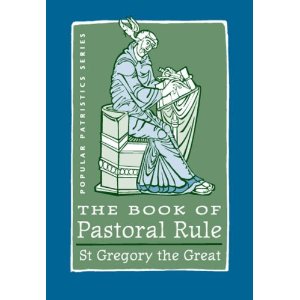
THE BOOK OF PASTORAL RULE


by Gregory the Great (c.540-604)

Back in seminary, I was required to read this classic book on Pastoral Theology in my History class with Dr. Peter Wallace. I remember reading this and many other ancient texts with great delight. The modern publisher of this book summarizes its comment about this volume by saying, “Recognized as the most thorough pastoral treatise of the patristic era, this sixth-century work by Saint Gregory the Great carefully details the duties and obligations of the clergy concerning the spiritual formation of their flock.”

Here’s my summary of Part I and Part II of this book. I hope this helps to remind us pastors and elders, and those aspiring to the work of shepherding God’s flock, that the work of ministry is a privilege God has given to those whom He called to the pastoral office to use His gift of leadership to serve His people and to glorify Him.

Part I. Concerning Qualifications for Spiritual Leader and Shepherd
1. Knowledge of the Lord and sufficient pastoral experience.
2. One who lives and practices what he learns.
3. He does not fear adversity or desire prosperity.
4. A person who is not easily distracted by 'managerial' tasks but able to focus on the main task of pastoral leadership.
5. A man of virtue who is willing to expend oneself and one's personal enrichment in order to lead and feed the flock of God.
6. He is humble to recognize his unworthiness to the office but willingly obeys when called.
7. One may willingly aspire for spiritual leadership while another may have been brought to it by compulsion.
8. While the office of a bishop or elder is a good work to be desired, one has to seek not the honor of the office but the office itself and what it entails.
9. The one who aspires for spiritual leadership should not assume that he will do well when he is into it even though he showed no virtue as a layperson.
10. Being a good example for everyone in life and piety must be a quality for the one to assume spiritual leadership.
11. Those who lack the qualities for spiritual leadership should not present themselves to it.


Part II. Concerning the Life of the Pastor
1. The life of a pastor must outshine that of his flock. He must retain a life of righteousness.
2. His thoughts must be pure so that he can reasonably deal with those who need cleansing of the heart.
3. The pastor must be exemplary in his service, not just with his words.
4. He must know when to keep silent and listen to his people and when to speak the right words to build his people up.
5. The pastor needs a delicate balance of sympathy and compassion to his neighbor and a solemn piety and intimacy with God.
6. He must be able to humble himself in the company of the good yet firm enough to confront and assert his authority over those who are delinquent in their life.
7. The pastor should not abandon his private internal life due to the demands of public external responsibilities, nor should he be overwhelmed by the needs of his private interior piety to the point of abandoning the public matters of his office. He should therefore watch himself not to be preoccupied with one at the expense of the other for both his internal piety and public responsibility are important in serving the people of God.
8. The pastor should be careful in his ministry not to seek to please others or seek their approval. His concern, however, must be to lead others to what pleases them, that is, the truth of God, that which satisfies their soul.
9. He must have the capacity to distinguish between virtue and vices in self and in others for some of the vices seem to look like virtues at first instance, but through careful consideration vices manifest themselves as they really are.
10. A good pastor must know when to rebuke and correct those who err and when to forego and forewarn those who need to be warned. He must also be able to discern when to be firm and when to be gentle in dealing with his flock.
11. By the inspiration and guidance of the Holy Spirit, the pastor must learn to devote himself in the meditation and sacred study of the Word of God in order to gain wisdom and insight in fulfilling his office.

Monday, March 12, 2012

Does God Answer the Prayers of Unbelievers?


This question was asked in one of the Facebook fora that I’m a part of. Since I’m very interested in anything about prayer, I’ve shared some of my thoughts on this question. Here are a few of those thoughts.

First, the simple answer may be found in the Gospel of John: "We know that God does not listen to sinners, but if anyone is a worshiper of God and does his will, God listens to him" (John 9:31).

Second, when one surveys the Biblical passages on prayer, the overwhelming evidence tells us that God answers the prayers of His people if it is according to His will. However there are instances in the Old Testament that even foreigners, non-Israelites, are heard by the Lord when they come to Him in faith, as 2 Chronicles 6:32-33 says, "“Likewise, when a foreigner, who is not of your people Israel, comes from a far country for the sake of your great name and your mighty hand and your outstretched arm, when he comes and prays toward this house, hear from heaven your dwelling place and do according to all for which the foreigner calls to you, in order that all the peoples of the earth may know your name and fear you, as do your people Israel, and that they may know that this house that I have built is called by your name." That explains the Roman centurion in Matthew 8:5-13 and the Canaanite woman in Matthew 15:21-28. Hebrews 11:6 tells us that "… without faith it is impossible to please him, for whoever would draw near to God must believe that he exists and that he rewards those who seek him."

Third, there are times of course that God does not hear the prayers of His people, that is, when they remain in their sin. "O Lord God of hosts, how long will you be angry with your people's prayers? You have fed them with the bread of tears and given them tears to drink in full measure” (Psalm 80:4-5). Psalm 66:18 also adds, “If I had cherished iniquity in my heart, the Lord would not have listened.” Confession of sin and repentance from sin are necessary before the Lord could hear His people's prayer.

This is consistent with what James is saying in 4:13-16: "Is anyone among you suffering? Let him pray. Is anyone cheerful? Let him sing praise. Is anyone among you sick? Let him call for the elders of the church, and let them pray over him, anointing him with oil in the name of the Lord. And the prayer of faith will save the one who is sick, and the Lord will raise him up. And if he has committed sins, he will be forgiven. Therefore, confess your sins to one another and pray for one another, that you may be healed. The prayer of a righteous person has great power as it is working." The Lord hears the prayers of His people who recognize and confess their sins before Him.

So it seems that the overwhelming answer of the Scripture to the question, “Does God answer the prayer of unbelievers?” is "No!"

Fourth, as one who subscribes to a Reformed confession, I think the Heidelberg Catechism (1563) gives us a very important thought on why Christians ought to pray and what kind of prayer that pleases God and moves Him to answer. In Lord’s Day 45, Question and Answer 116, the Catechism asks, “Why do Christians need to pray?” The answer goes, “Because prayer is the most important part of the thankfulness God requires of us (Ps. 50:14-15; 116:12-19; 1 Thess. 5:16-18). And also because God gives his grace and Holy Spirit only to those who pray continually and groan inwardly, asking God for these gifts and thanking God for them (2 Matt. 7:7-8; Luke 11:9-13).

The Catechism continues to ask in Question and Answer 117, “What is the kind of prayer that pleases God and that he listens to?” Here is the Catechism’s answer, “First, we must pray from the heart to no other than the one true God, revealed to us in his Word, asking for everything God has commanded us to ask for (Ps. 145:18-20; John 4:22-24; Rom. 8:26-27; James 1:5; 1 John 5:14-15). Second, we must fully recognize our need and misery, so that we humble ourselves in God’s majestic presence (2 Chron. 7:14; Ps. 2:11; 34:18; 62:8; Isa. 66:2; Rev. 4). Third, we must rest on this unshakable foundation: even though we do not deserve it, God will surely listen to our prayer because of Christ our Lord. That is what God promised us in his Word (Dan. 9:17-19; Matt. 7:8; John 14:13-14; 16:23; Rom. 10:13; James 1:6).

Finally, a friend raised the issue that there are occasions when it seems that God answers the prayer of unbelievers and because of the answer to that prayer these unbelievers got converted to Christianity. One of the examples she mentioned is the former Russian church persecutor Sergie Kourdakov who wrote a book, "Forgive Me, Natasha", and related in that book that when he prayed, "God, if you exist please show me Yourself," and God showed him, and he became a Christian after he defected and jumped ship in Canada.

She also mentioned another example. She related a "student exchange from China who has never heard of the name of God and did not know that Jesus is God. She never saw a Bible. She came to an international Bible study with the motive to practice speaking English. One day, her bag was caught in between the doors of a New York City Subway train. A week before that, she read about Jesus raising Lazarus from the dead and answering Mary's prayer. So she said, ‘I heard the God of Christians answers prayer. I am not a Christian but I want to pray to the God of the Christians to help return my bag.’ (Inside her bag were her passport, $400 cash, her student's class cards for New York University). She called the staff of International Students to pray with her and for her. She also called on the God of the Christian to show Himself to her. The Staff of ISI are under fire because it is impossible to retrieve a bag with cash in NYC. One week after, her bag was returned at the NYU Lost and Found section, everything was intact, and the cash was untouched! The unbeliever student from China said ‘I see that the God of Christians answers prayers indeed!' She became a Christian.”

I responded that these examples presuppose what the Scripture really teaches that before these unbelievers called upon the Lord they must have heard something about God and Jesus Christ first. Then through providential circumstances they were brought into a situation to call upon God. And as Hebrews 11:6 tells us, those who draw near Him must believe that He exists, even if that faith is but like a mustard seed.

I can't help thinking of two Gentile women who became true Israelites because of what they've heard about the God of Israel. Rahab, for example, must have heard about the God of Israel through the miracles He performed in Egypt and in the wilderness before she changed allegiance from the god of Jericho or the god of his people to the God of Israel (Judges 2:8-13). Likewise, before Ruth the Moabitess made that timeless confession to her mother-in-law, “Your people shall be my people and your God shall be my God,” she must have heard about the God of Israel, probably through her husband Mahlon and her in-laws.

This is quite relevant because in the case of the Chinese student exchange, before she prayed to the God of the Christians she must have read or heard about Jesus. This is the same situation even in the case of Sergei Kourdakov. Before he prayed to God, he must have heard a lot of things about God whom he denied and whose children he persecuted. Both of them might have believed God (in the sense that they have knowledge or heard about God) before they started praying to the Lord, but it seems clear that by the time they prayed to God, when they begin asking something from God, God has already started to work faith in them, otherwise how can they call upon Him?

So the Holy Scripture clearly teaches that God hears and answers the prayer of His children when they pray according to His will and purpose and when they ask Him humbly, fully aware of their undeserved status before Him who is holy and just, loving and merciful. Experience as well proves that. Just think of how many times we have failed to obey God’s will and yet when we draw near Him, humbling ourselves and confessing our sins, He hears us and grants us His blessings. Even those unbelievers whom He draws to Himself are given the faith to believe Him and to turn to Him and to call upon Him. This is all by His amazing grace and abundant mercy to undeserving sinners like you and me.

Search This Blog